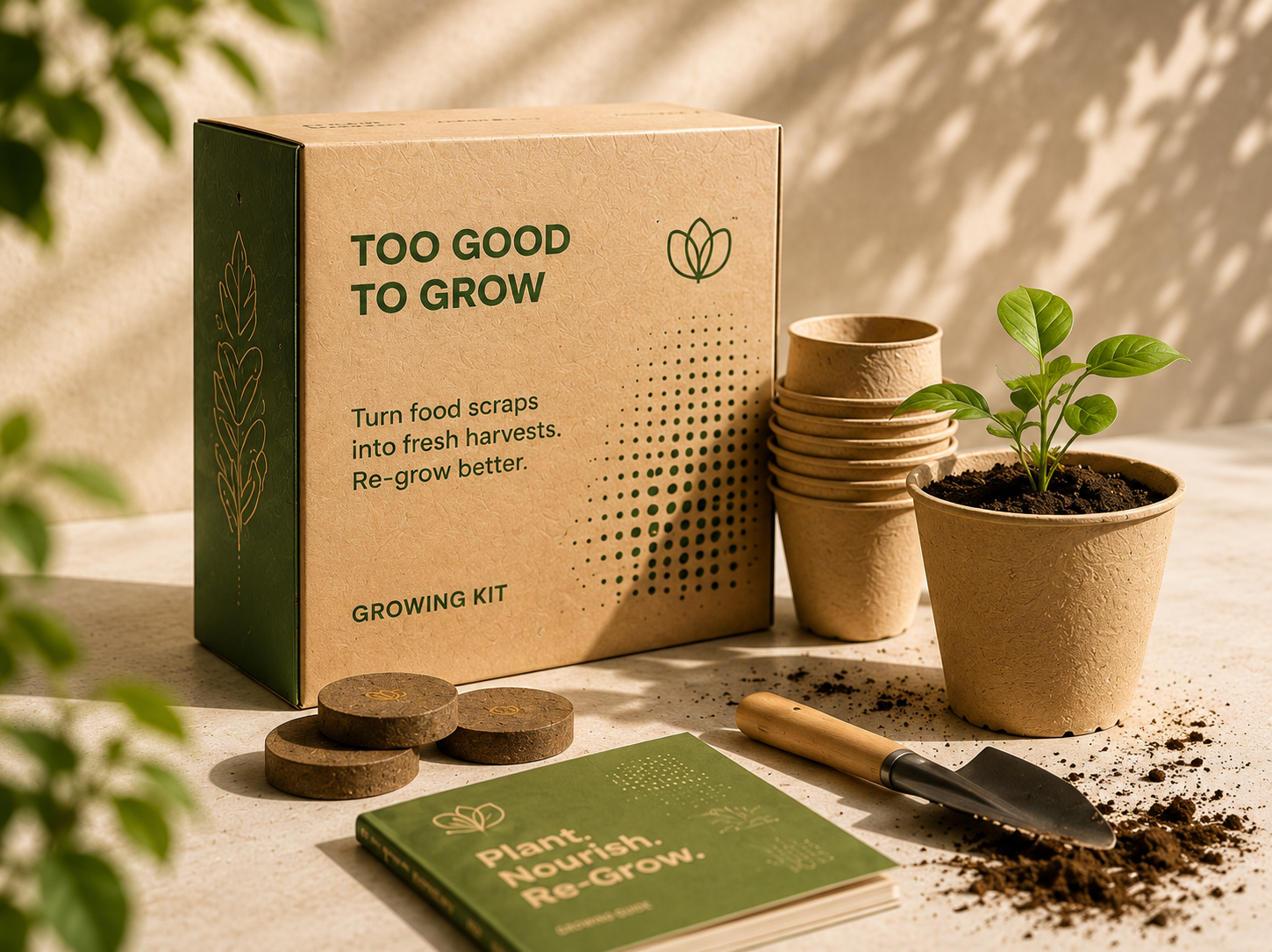
Too Good To Grow
Starting from Too Good To Go's mission to end food waste, closing the loop on food waste, from scraps to harvest.
- Role
- Desk research, concept definition, service communication, impact mapping
- Tools
- Figma · Miro
What is TGTG?
Mission, vision, method.
Mission
To inspire and empower everyone to take action against food waste and achieve a world free of food waste.
Vision
A world where all food produced is consumed, by fostering a community driven, sustainable food ecosystem.
How they do it
An app based marketplace connecting consumers with businesses selling surplus food at a discount, broader advocacy and education initiatives, and tracking of environmental and social impact.
Background
The food industry generates significant waste through packaging, production, and distribution. Per the FAO, roughly one third of food produced for human consumption globally, around 13 billion tonnes , is lost or wasted every year.
Market signals
50+ kg
of coffee grounds and vegetable peels generated weekly by bakeries and cafés.
UK WRAP, 2020
60%
of EU households compost food scraps, but urban infrastructure struggles.
European Environment Agency, 2022
7.4%
CAGR growth in the home gardening market (2023-2030).
Grand View Research, 2023
Materialisation
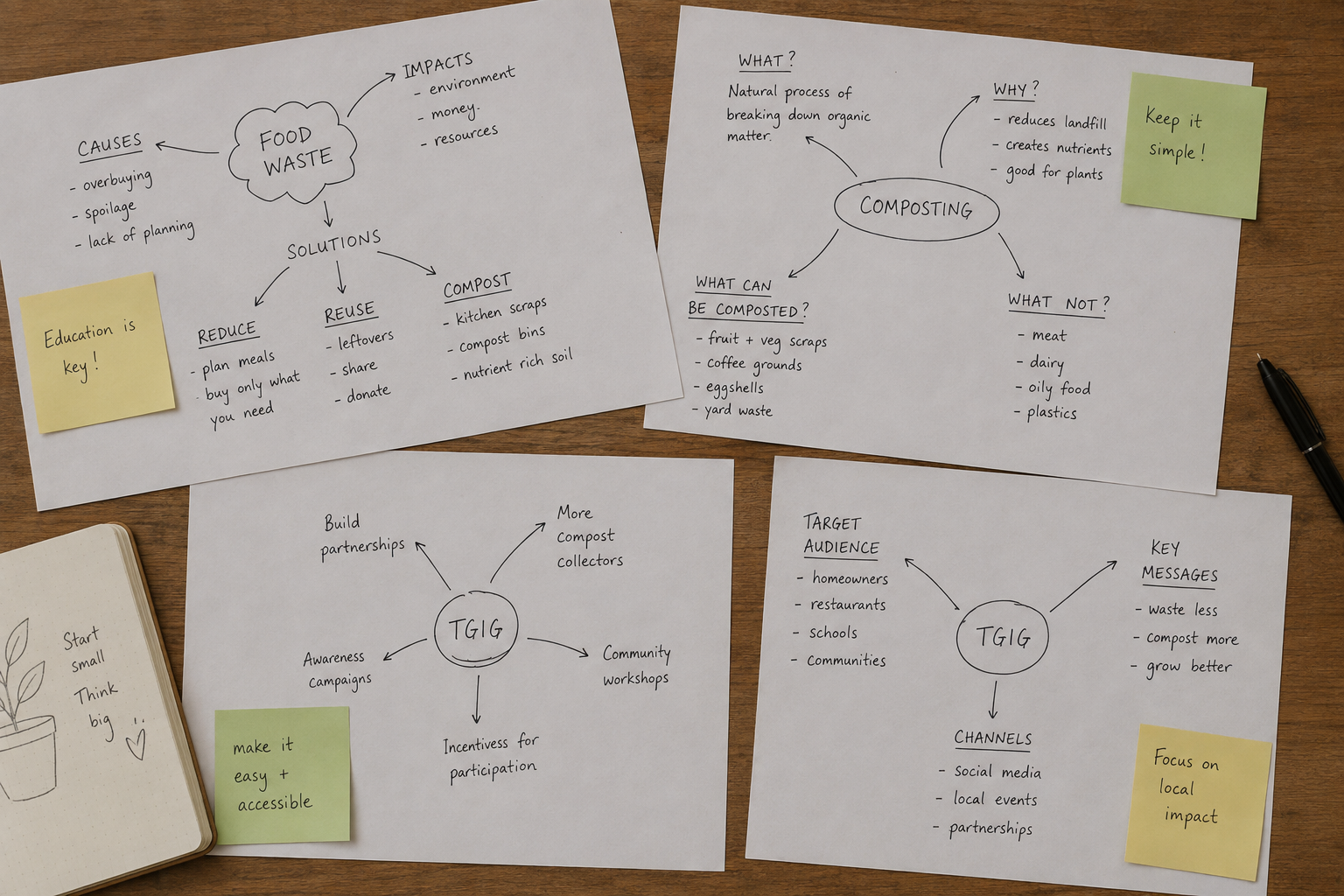
Mapping it out.
A workshop moment: mind mapping signals, actors, and flows to find where the loop could close.
Key components
- Brand study.
- Market research for opportunity identification.
- Ideation and iteration mapping service flow.
- Service blueprint.
- Systemic impact.
"How might we transform food businesses' 'waste' into a valuable resource for local communities?"
Process
A three-step loop.
- 01
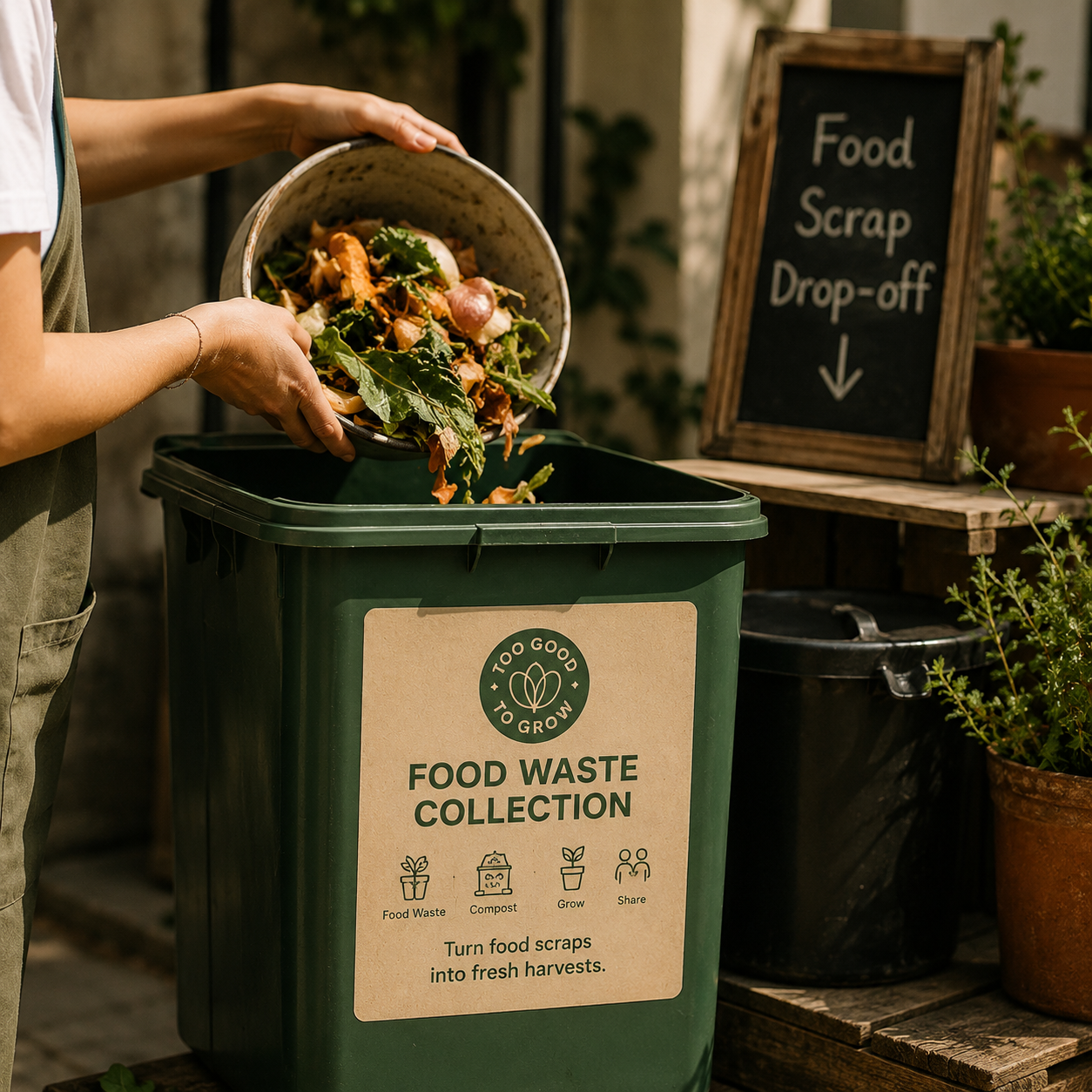
Collect
Scraps from local businesses.
- 02
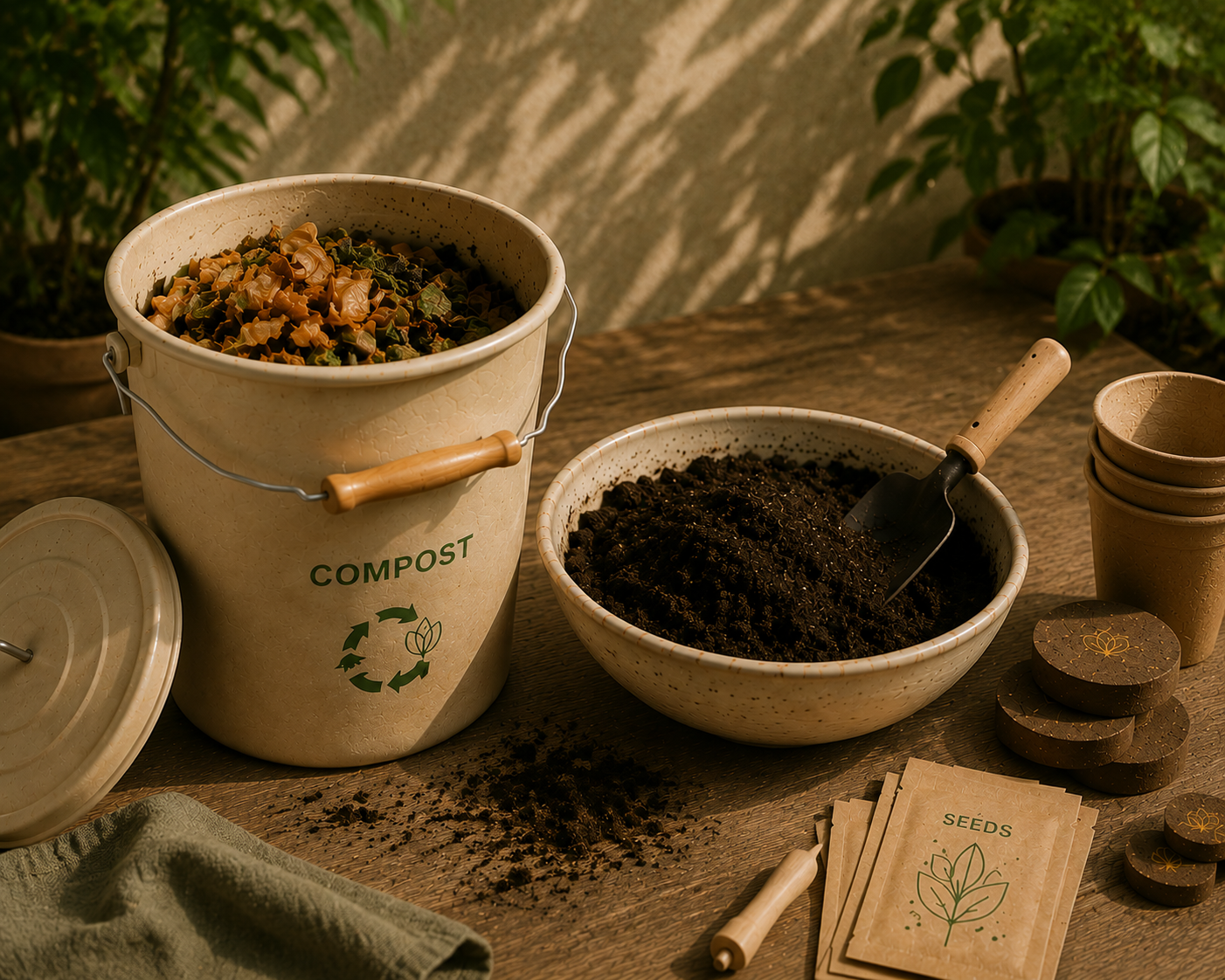
Transform
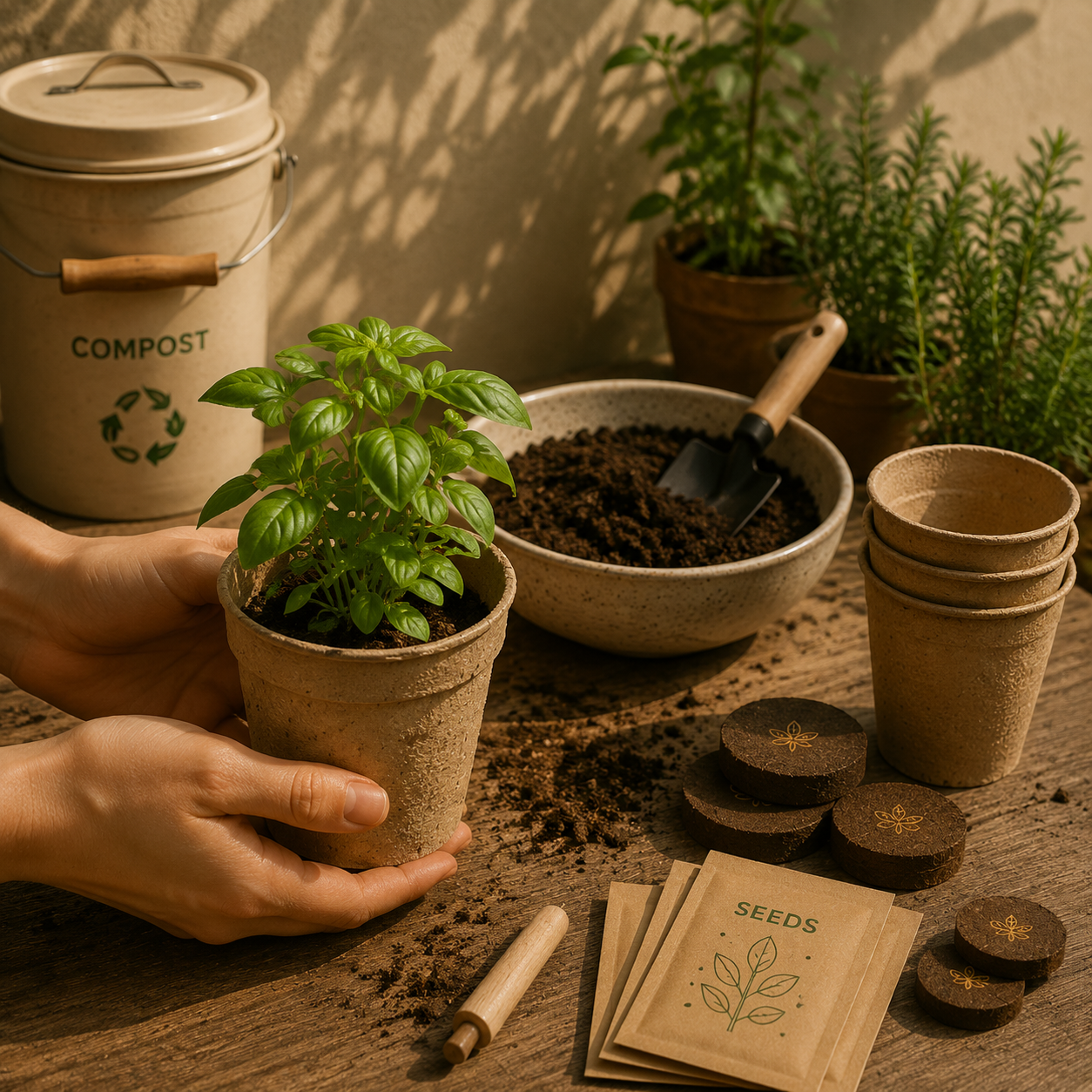
Into growing kits.
- 03
Grow
Vegetables nourished by community scraps.
Learnings
An outside-in, research-first approach helped turn insight into a concrete, systemic service flow, connecting quantified market signals directly to a working service loop.